
This bio says that Carl Perkins gave a lot of credit to Bill Monroe as a grandfather of rockabilly. That’s an example of the beauty of music: The direct line from Monroe– with plenty of contributions from elsewhere, of course — through Perkins and others, to rock-and-roll.
Rockabilly pioneer Carl Perkins lent a helping hand when the two currents that defined Southern music at mid-century – rhythm & blues and country & western – came together as rock and roll. He was a native Tennessean who’d grown up in a sharecropping family near Tiptonville, a farming community in Lake County, north of Memphis. Perkins picked cotton in the fields and learned how to play guitar from a black field hand named John Westbrook. He began performing in the Forties with the Perkins Brothers Band, which included siblings Jay and Clayton. Carl was heavily influenced by bluegrass legend Bill Monroe - “Some of those old songs [of his] are so close to rockabilly it’s scary,” he said – and was right on track with Presley in the synthesis of rock and roll from homegrown elements. (Continue Reading…)
Here is the beginning of Perkins’ bio from AllMusic:
While some ill-informed revisionist writers of rock history would like to dismiss Carl Perkins as a rockabilly artist who became a one hit wonder at the dawn of rock & roll’s early years, a deeper look at his music and career reveals much more. A quick look at his songwriting portfolio shows that he has composed “Daddy Sang Bass” for Johnny Cash, “I Was So Wrong” for Patsy Cline, and “Let Me Tell You About Love” for the Judds, big hits and classics all. His influence as the quintessential rockabilly artist has played a big part in the development of every generation of rocker to come down the pike since, from the Beatles’ George Harrison to the Stray Cats’ Brian Setzer to a myriad of others in the country field as well. His guitar style is the other twin peak — along with that of Elvis’ lead man Scotty Moore — of rockabilly’s instrumental center, so pervasive that modern day players automatically gravitate toward it when called upon to deliver the style, not even realizing that they’re playing Carl Perkins licks, sometimes note for note. As a singer, his interpretation of country ballads is every bit as fine as his better known rockers. And within the framework of the best of his music is a strong sense of family and roots, all of which trace straight back to Carl’s humble beginnings. (Continue Reading…)
Perkins was inducted into The Rock & Roll Hall of Fame in 1987. Above is That’s Alright Mama and below is Matchbox.
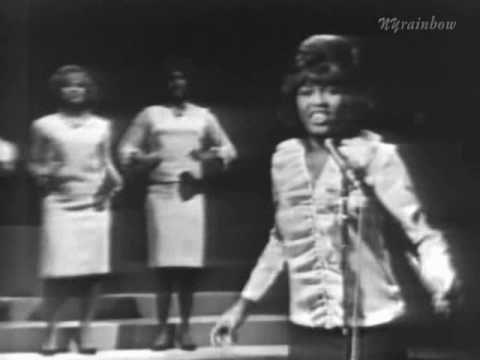
Little Eva was the inspiration for The Locomotion, which was written by Carole King and Gerry Goffin.
The start of Rolling Stone’s bio of AC/DC:
AC/DC ‘s rowdy image, giant riffs and macho lyrics about sex, drinking and damnation have helped make them one of the top hard-rock bands in history. When they first emerged from Australia in the Seventies, the primal simplicity of their songs and riffs fell on deaf ears of more prog-attuned American rock fans; in fact, they were initially marketed as a punk band. But that started to change by decade’s end. And thanks in large part to duck-walking, knickers-clad guitar showman Angus Young, who became as famous for mooning audiences as for his gritty blues-based lead guitar, the group has remained one of the world’s most dependable concert draws. AC/DC’s albums consistently go platinum, despite never having produced a Top Twenty single in the U.S. Read more
Here is one person’s take on the top songs from the band.
Highway to Hell
Dennis Potter was an English screenwriter/playwright known for mixing fantasy and reality. His best known works — Pennies from Heaven and The Singing Detective — were BBC productions. The method is the same: The drama is interrupted by the cast spontaneously breaking into elaborately choreographed productions numbers that use scratchy recordings of contemporary pop tunes, to which they lip sync. The songs hint at the underlying tensions and sadness of the lives of the characters, as if they are coming from their unconscious. Potter at the same time is commenting on the growing influence of the media in everyday life, even then. It’s hard to describe other than to say that it’s brilliant.
The title character of The Singing Detective suffers from a horrific skin disease — as Potter did — and spends his days hallucinating from a hospital bed. The lead character of Pennies From Heaven (played in the BBC production by Bob Hoskins, who retired earlier this year after being diagnosed with Parkinson’s disease) is a traveling sheet music salesman. Steve Martin played the role in the American production, which got mixed reviews.
The song in the clip below starts at about the 6 minute mark.
Dry Bones
I was looking for a nice afternoon post and happened across this famous photograph. Here is the story of the shot, which features just about every famous jazz personality of the time. Wikipedia says that as of April only four participants still are alive. This site allows you to hover over each image for an ID and link to a bio, while this one offers closeups. Here is an interesting clip about the photo, which unfortunately seems to be cut off.
The Rolling Stones have released a new song for the first time in six years.
Gloom and Doom, according to Consequence of Sound, is one of two new songs that will accompany GRRR!, a fifty-year anniversary package that will be released on Nov. 13. The other new song, One More Shot, is expected soon. The video is embedded at CoS. The song is pretty good. The video isn’t.
***
Digital Dream Door is quite a site for music lovers. Here is its take on the top ten songs of 1950. Number 9, of course, is of special note because it became the name of a band that didn’t do too badly.
1. The Fat Man - Fats Domino
2. Please Send Me Someone To Love - Percy Mayfield
3. Teardrops From My Eyes - Ruth Brown
4. Mona Lisa - Nat “King” Cole
5. Tennessee Waltz - Patti Page
6. Long Gone Lonesome Blues - Hank Williams
7. Mardi Gras In New Orleans - Professor Longhair
8. I’m Movin’ On - Hank Snow
9. Rollin’ Stone - Muddy Waters
10. Double Crossing Blues - Johnny Otis (Little Esther & the Robins)
Here is Patti Page’s Tennessee Waltz. I was surprised by how slow it is compared to subsequent versions. But it’s beautiful.
Many folks reading this post know more about Miles Davis than I do. So it makes little sense for me to write anything about the second most important trumpet player who ever lived.