Mashable reports on a study conducted at the University of Leicester that suggests blasting music through ear buds can cause hearing problems:
Many music players can reach levels comparable to that of a jet engine. It is known that noises above 110 decibels can cause hearing problems, including ringing of the ears or temporary deafness — what you may experience after attending a particularly loud concert.
It also is true that many people use ear buds as they do other things that may require attention or the ability to hear outside noises. The best advice: Turn the music down.
***
A couple of weeks ago Paul McCartney celebrated his 70th birthday. Proving once again that even being a member of Beatles doesn’t stop the aging process, Ringo turned 72 on Saturday.
Here is Photograph, which was written by Starr and George Harrison. This site really doesn’t have enough traffic yet for a meaningful poll question, but here are two good ones anyway: What is your favorite non Lennon/McCartney Beatles song? What is your favorite post-Beatles song by members of the band?
Here is Ringo’s birthday greeting to Paul.
This site offers all the information that anyone can ask for about the great Gordon Lightfoot. It links to a number of other sites.
One of the sites that is linked to is dedicated to the Edmund Fitzgerald tragedy. The S.S. Edmund Fitzgerald, the largest ship working the Great Lakes, sank while carrying ore in Lake Superior during a ferocious storm on November 10, 1975. The entire crew of 29 men was lost. The timeline of events is riveting.
Here are the Canadian Railroad Trilogy, Sundown and If You Could Read My Mind. Lightfoot is on tour this autumn.
There is a lot of great music in old comedies.
The Bob Hope of the 1930s and 1940s was a far different guy than the reactionary character of the 1960s and 1970s. The earlier Hope was funny and had what in those days passed for a streak of anti-authoritarianism. He spent the latter two decades comfortably coasting on cynical hippie jokes and embarrassingly unfunny and horrendously produced television specials. If you didn’t see them, it’s hard to imagine just how lame those shows were.
But, as bad as Hope was as a comedian at the end, he deserves immense credit for continuing to travel to entertain the troops.
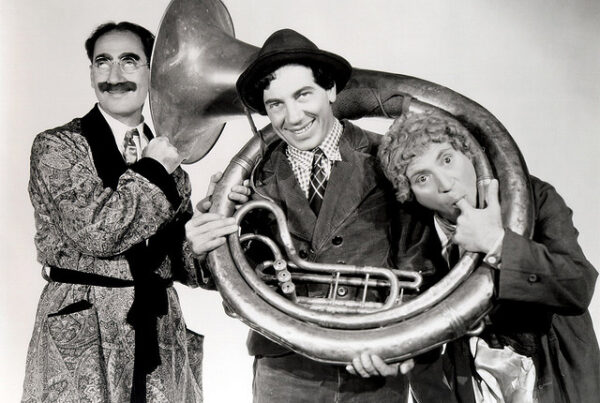
The true subversive, of course, was Groucho. Here is the Hello, I Must Be Going/Hooray for Captain Spaulding sequence from Animal Crackers. It is a pure delight, except for the unfortunate racism of the first few moments. Margaret Dumont was just perfect.
Seeing the perpetual innocence of Laurel and Hardy after so many years is like visiting the old neighborhood. This dance is from Way Out West. Oliver Hardy was quite agile for a guy that big. The interesting thing is that Stan Laurel was deeply involved in putting the films together. Hardy — called “Babe” by his contemporaries — couldn’t care less. He played golf until told to show up for shooting.
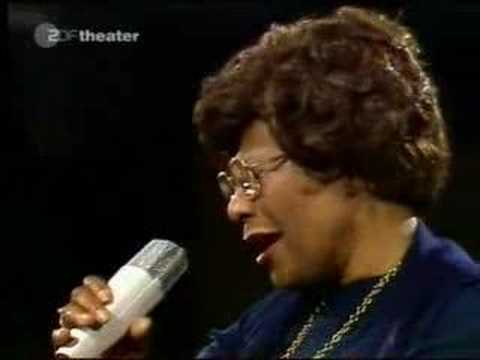
Unlike some other jazz greats, there is a tremendous amount of great Ella Fitzgerald material on YouTube and other video sites. None are better than this beautiful version of The Man I Love, a standard by George and Ira Gershwin. Tommy Flanagan is the piano player. The band is great, but the star of course is Ella.
Also check out Fitzgerald’s early hit A-Tisket A-Tasket. TDMB site already has linked to her powerful version of Mack the Knife.
Two major contributors to Fitzgerald’s career are producer and impresario Norman Granz and drummer Chick Webb, who discovered her.
Here is Fitzgerald’s bio and a discography.
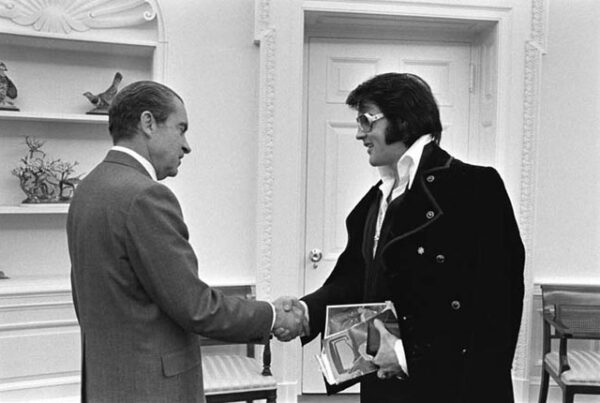
The shows Elvis in relaxed mode during his 1968 comeback. The guitarist is Scotty Moore.
Here is a nice bio and a version of Long Tall Sally from 1956.
Peter Guralnick wrote an acclaimed two-part biography of Elvis. The second volume (Careless Love: The Unmaking of Elvis Presley, 2000) is one of the saddest books imaginable. Elvis comes across as a decent guy who was just unable to deal with what he had become. It gets grotesque, mentally and physically, towards the end. I’m sure the basic themes are similar in the fall of Michael Jackson.
The first volume of Guralnick’s bio is Last Train to Memphis: The Rise of Elvis Presley (1995).
Los Lobos, Jerry Garcia and Bob Weir do perhaps the greatest American patriotic song. Thanks for visiting the site.
Here’s Chet Atkins doing another great American song.
This recording features Charley Christian, Thelonious Monk and Dizzy Gillespie.
Christian was a member of Benny Goodman’s sextet and a pivotal figure in the emergence of the guitar as a solo instrument and later as the key focal point of rock bands. This video from Discover Oklahoma puts Christian in the context of the Oklahoma City neighborhood — called Deep Deuce — from which he emerged.
This is Stompin’ the Savoy, also recorded at Minton’s, which is on West 118th Street in Harlem. The recording is from 1941.
Here is information from Duke University and a more concise bio at The Rock and Roll Hall of Fame site.