Posts Tagged: Frank Sinatra

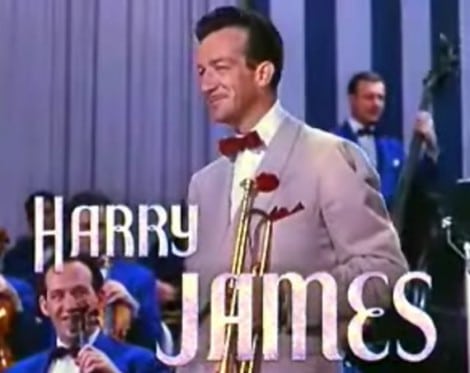
Harry James: Don’t Be That Way and You Made Me Love You

Harry James was one of the most important performers of the World War II era–and not just because he played a major role in the career of Frank Sinatra. NNDB has his profile:

Both a skilled trumpet-player and a popular bandleader, Harry James began playing in dance bands when he was only 15. In 1936 he was invited to join Benny Goodman’s orchestra, and became so popular with audiences that when he decided to start his own band in 1938 Goodman helped to finance the venture.

Shortly after The Tommy Dorsey Orchestra began performing publicly in 1939, then-unknown singer Frank Sinatra was brought on board. The singer remained active with the band for only a year, however: finances during this period were tight, and when a more lucrative offer was given to Sinatra by Tommy Dorsey, James let him out of his contract so he could pursue it. Despite this defection, the orchestra achieved considerable popularity throughout the early 40s, in part aided by appearances in feature films such as Best Foot Forward and I’ll Get By.

In 1943 James married Betty Grable, the top pin-up model in the country. Not a bad personal development, but his musical fortunes were not moving along such positive lines, and in 1946 he dissolved the orchestra. This retirement proved to be short-lived, however, and he continued performing on and off (particularly in Las Vegas) until nine days before his death in 1983. (Continue Reading…)

There clearly is more to the story than that. Tom Nolan’s review in January Magazine of Peter Levinson’s biography of James, which was published in 1999, starts filling in some of the blanks:

For many jazz fans, trumpet player Harry James was at best superfluous and at worst a sellout: a musician of formidable technique who abandoned the fiery style that made him a star of the Benny Goodman Orchestra in the late 1930s, only to adopt a much more schmaltzy, flashy, commercial manner that led to a remarkable number of hit records throughout the 40s.

To dance music lovers, James was the leader for three decades of a consistently satisfying big band whose earliest incarnation gave Frank Sinatra his start and whose 1950s version found its most lucrative gigs at the casino hotels in Vegas and at Tahoe.

But most of America knew Harry James simply as the husband of movie star Betty Grable, the blonde pinup who caused World War II G.I.s to croon, “I want a gal, just like the gal, who married Harry James…”

None of these versions of James would necessarily warrant publishing a major biography at century’s end; but Peter J. Levinson, a longtime music publicist and first-time author, has produced one in Trumpet Blues. And in putting together all the Harry Jameses — jazz player, big-band leader, celebrity husband (as well as promiscuous womanizer, unrecovered alcoholic and ruinous gambler) — he’s not only made James a much more interesting figure than might have been imagined, but written one of the most engrossing and compelling jazz biographies in many years. (Continue Reading…)

Above is Don’t Be That Way and below is You Made Me Love You.

facebooktwittergoogle_plusredditpinterestlinkedinmailby feather

The American Pop Music Hall of Fame Will Have a Great First Class


The site has a news item today that reports the American Pop Music Hall of Fame is seeking input from the public on which group or performer should be in the inaugural class. The story the item is based on has a link to the entire list of candidates.

They are:

Paul Anka, The Beach Boys, the Beatles, the Bee Gees, Tony Bennett, Chuck Berry, Pat Boone, the Carpenters, Johnny Cash, Ray Charles, Chubby Checker, the Dave Clark Five, Nat King Cole, Perry Como, Bobby Darin, Neil Diamond, Bob Dylan, the Everly Brothers, the Four Seasons, Connie Francis, Elton John, Dean Martin, Johnny Mathis, the Monkees, Ricky Nelson, Roy Orbison, Patti Page, Les Paul & Mary Ford, the Platters, Elvis Presley, Simon & Garfunkel, Frank Sinatra, Smokey & Miracles, The Supremes, Three Dog Night, Bobby Vinton, Dionne Warwick, Andy Williams, Hank Williams and Stevie Wonder.

I wanted to feature one of the acts on the site in addition to the news item. So I took a pen, closed my eyes and pointed to the screen. The Everly Brothers was the closest.

facebooktwittergoogle_plusredditpinterestlinkedinmailby feather

Another Hall of Fame to Open its Doors

The question of whether or not we need a new hall of fame is a good one.

That isn’t, however, the one being asked by The American Pop Music Hall of Fame, which is setting up temporary shop in Canonsburg, PA. What the group is asking for is input on the first class of nominees.

There are 40 nominees including Frank Sinatra, The Beatles, Elvis Presley assorted other mega stars. Candidates must have had a national hit between 1946 and 1975. Ten of 40 nominees eventually be the inaugural class. The story links to the list of candidates.

***

facebooktwittergoogle_plusredditpinterestlinkedinmailby feather

Little Feat: Dixie Chicken

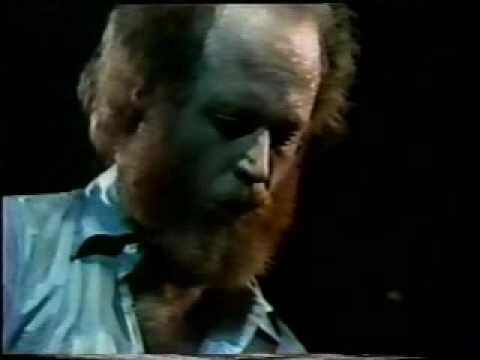
It’s a great trivia question: Name a performer who recorded with Frank Zappa and Frank Sinatra. The answer is Lowell George, the driving force behind Little Feat. This terrific bio of the band has that and a lot more information.

George died in 1979. Though he was the highest profile member of the band, there was a world of talent beyond. Here is the other big hit, the great Fat Man in the Bathtub. Other tunes are Sailin’ Shoes, Spanish Moon and Rock ‘n Roll Doctor. The band is on tour.

facebooktwittergoogle_plusredditpinterestlinkedinmailby feather

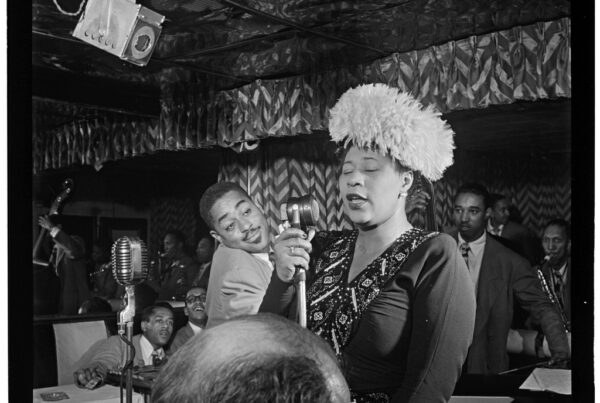
Ella Fitzgerald: Mack the Knife

Mack the Knife is a beloved jazz standard. Besides Fitzgerald, Louis Armstrong, Frank Sinatra and Bobby Darin are heavyweights who recorded it. Here is a fabulous version by Armstrong.

The song, which is from Kurt Weill’s Threepenny Operais not very nice. Weill’s wife, Lotte Lenya, sings it here, probably in the 1950s. She’s not much of a vocalist in English, but it’s a fascinating clip. (Here she sings it in German.)

The commentary before she sings describes Berlin as a degenerate pit in which Nazism grew. Lenya leaves no doubt who this much-loved song really is about at the end.

Here are some lyrics from the song. Very pleasant stuff:

Jenny Towler
Poor wee Jenny,
There they found her
Knife in breast.

Mackie’s wandering
On the West Pier
Hoping only
For the best.

Mind that fire burnt
All through Soho.
Seven kids dead
One old flower.

***

And those sweet babes
Under sixteen
Story goes that
Black and blue

For the price of
One good screwing
Mackie, Mackie
How could you?

It goes on like that. It’s also unclear why the murderer, Macheath, is not German. I have no interest in seeing a production or reading it, so I guess I’ll never know.

At the end of the day, we have a song that is about murder and references Hitler. It’s beloved and sung by big stars. Actually, it’s a perfect pop classic for the 20th century.

facebooktwittergoogle_plusredditpinterestlinkedinmailby feather