Since The Daily Music Break doesn’t update on Sundays and since any reason to post Irish music is a good reason, the site is celebrating St. Patrick’s Day a day early with The Dubliner’s playing Whiskey in the Jar (above) and The Irish Rover (below).
Here is the beginning of a long but worthwhile profile of this hugely influential band.
Around 1961, Ronnie Drew returned to Dublin from Spain, where he had learned the guitar, and began to perform informally at parties, singing songs, and telling stories. A relatively well-known comedian by the name of John Molly heard Ronnie at one these parties and invited him join his show at the Gate Theatre. Ronnie was glad to go along as the “curtain warmer”, as well as to perform solo spots throughout the show and feed Molloy straight lines. Molloy wanted to add another musician and Ronnie suggested tenor banjo player Barney McKenna. Molly lived around the corner from O’Donoghue’s Pub and there they would meet every Friday night to get paid for the Gate gigs. Luke Kelly had come home from England with an interest in folk music, singing and playing 5-string banjo, and Ciarán Bourke played the whistle and guitar while studying in the University.
In 1962, there were few sessions in Dublin at the time. O’Donoghue’s Pub in Merrion Row was a quiet place where, according to Ronnie, “civil servants used to be sneaking in from their offices to have small whiskeys and things”. “One night,” says Ronnie, “we asked Paddy Donoghue, round about Christmastime, could we play a few tunes. So we played a few tunes. That was it.” “The music has never stopped in Donoghue’s since that day. That was more or less how the whole thing got going—or how the whole thing began.” From there, according to Ronnie, “people used to ask us to sing in places and we got a few pounds for playing. All these pubs which they used to euphemistically call cabarets—they’re just pubs—a room where you can sing. So we got a few of these.” In the beginning they were know as “The Ronnie Drew Group” because, as Ronnie states, “I had—which isn’t hard to do—attained a little fame in Dublin, because Dublin’s very small and you know all the reporters.” (Continue Reading…)
The AllMusic’s bio begins by contrasting The Dubliners to The Clancy Brothers. It sounds like the Beatles and The Rolling Stones. Indeed, the early days of all four bands were separated by just a few years and not too many miles:
Nearly three decades since they first came together during informal sessions at O’Donoghue’s Pub in Dublin, the Dubliners remain one of the most influential of Ireland’s traditional folk bands. Unlike their counterparts The Clancy Brothers, the Dubliners have never strayed from the raw looseness of the pub scene. According to Dirty Linen, “Whereas The Clancys were well-scrubbed returned Yanks from rural Tipperary, decked out in matching white Arab sweaters, the Dubliners were hard-drinking backstreet Dublin scrappers with unkempt hair and bushy beards, whose gigs seemed to happen by accident in between fist fights”. (Continue Reading…)
Here a band site featuring a nice picture of Barney McKenna, a founding member who died in April 2012.
Editor’s Note: The folks at Go-DIY Records were kind enough to post a note that TDMB welcomed new music. Several bands have sent me links and samples. My plan is to post the music in the order in which it came in and to present what the band (or its management) wrote — or as much of it as makes sense.
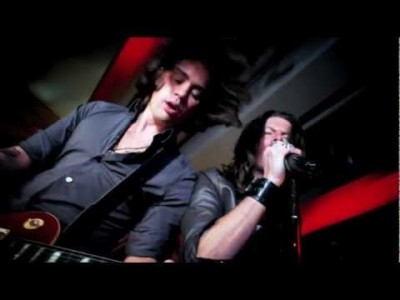
New up is Crash Midnight. Directly below is 151 and at the bottom is Diamond Boulevard.
Rock n’ Roll is back! Born out of a late-night car wreck and formed on the streets of Boston by Shaun Soho (lead vocals), Bo (bass guitar), and Alex Donaldson (lead guitar), CRASH MIDNIGHT has burst onto the music scene with vintage guitar riffs, pounding drums, and searing vocals. A collision of classic 70′s stadium rock with a punk swagger, their trademark sound is packing clubs and turning heads. With their exploding following and high-energy stage show, CRASH MIDNIGHT performs with all the reckless abandon of a runaway freight train and is poised to carry the torch for a whole new generation of Rock n’ Roll.
In 2009, the band inked a deal with Bronx Bridge Entertainment (Fontana/UMG) and has their debut full-length album, “Lost In The City” slated for release this Spring. With the electrifying Boston guitarist, Todd Friedman, and the incomparable Jim Donaldson on drums rounding out the line-up, the band is set to hit the road and hit it hard so brace yourself for CRASH MIDNIGHT to sideswipe your town with that brand of whiskey-soaked Rock n’ Roll you’ve been waiting for! Rock n’ Roll is back.
Asked about their direction and early influences, lead singer, Shaun Soho says “we were fed up with a lot of the stuff out on the radio today and wanted to make something that was real, true to what we were doing.” From all five band members living together in a cramped Boston apartment during the bands formative years where hard partying, destruction, and noise complaints were nightly occurrences, to pouring those experiences in the Boston scene into the band’s material, CRASH MIDNIGHT became an explosive live band on stage achieving local and regional success – “they are full of swagger and songs about real life and partying hard.”(HearNowLive Ent). “We wear our influences on our sleeves a lot,” says the band, “our sleeves smell a lot like high-proof rum and your girlfriend.”
“The band has been through a lot,” say Bo (bass), “we had to learn everything real fast. There’s a lot of empty promises, people trying to get you to sign this or that and promoters trying to scam you …“ Through relentlessly attacking stages on the Boston music scene with a ferocity typical of their approach to everything from promotion to partying, the band began entrenching themselves on the club circuit and expanding to tours of the East Coast and Mid West. “It was really something the first few times going out to clubs and seeing complete strangers wearing our band’s t-shirt … There was a point where we were taking duffel bags full of shirts, posters, and CD’s to the post office a couple times a week and mailing them not only all over the country, but the entire world,” says Soho.
While the band’s debut EP “Fresh From Detox” sold out of all 3,500 pressings in 3 months, legal complications side-lined the group from pursuing a full recording deal. “It ended up working out,” says Soho “we weren’t ready yet, still working out the songs and the sound.” Over more than a year’s time, CRASH MIDNIGHT concentrated on honing their live show and finalizing their songs, ultimately signing with Chris Brown to Bronx Bridge Entertainment in 2009.
Tal Farlow, who was nicknamed “The Octopus” because of the size of his hands and their ability to navigate the fretboard, has a surprisingly short bio at AllMusic:
Nearly as famous for his reluctance to play as for his outstanding abilities, guitarist Tal Farlow did not take up the instrument until he was already 21, but within a year was playing professionally and in 1948 was with Marjorie Hyams’ band. While with the Red Norvo Trio (which originally included Charles Mingus) from 1949-1953, Farlow became famous in the jazz world. His huge hands and ability to play rapid yet light lines made him one of the top guitarists of the era. After six months with Artie Shaw’s Gramercy Five in 1953, Farlow put together his own group, which for a time included pianist Eddie Costa. Late in 1958, Farlow settled on the East Coast, became a sign painter, and just played locally. He only made one record as a leader during 1960-1975, but emerged a bit more often during 1976-1984, recording for Concord fairly regularly before largely disappearing again. Profiled in the definitive documentary Talmage Farlow, the guitarist can be heard on his own records for Blue Note (1954), Verve, Prestige (1969), and Concord. He died of cancer July 25, 1998, at age 77. (Continue Reading…)
That’s it. Farlow was the subject of a movie, however — and the film’s site has a better bio. It starts this way:
Talmage Holt Farlow’s half-century career in jazz embodied the unusual. Born June 7, 1921 in Greensboro, North Carolina, he was supposed to grow up and become a textile plant worker like his father. Instead, he spent countless hours tuned-in to remote radio broadcasts of Count Basie, Benny Goodman and Coleman Hawkins. By the late 1940′s, the polite, lanky boy with the massive hands had moved to New York after playing in dance and society bands down South. Tal’s highly innovative style and unique sense of harmony soon established him as a vital link in the chain begun by Charlie Christian. His work in the bands of Buddy DeFranco, Artie Shaw, and in the landmark Red Norvo Trio with Charles Mingus eventually landed him on a successful and much-heralded career as a leader. (Continue Reading…)
The site also has some clips from the movie. The great jazz guitarists of the middle of the century seem all to have been inspired by Django Reinhardt and Charlie Christian. Farlow semi-retired to Sea Bright, New Jersey, where he was a sign maker. I haven’t been in Sea Bright, but know that it is possible to have a very nice life as a sign maker in those Jersey shore towns. Unless, of course, a hurricane happens by.
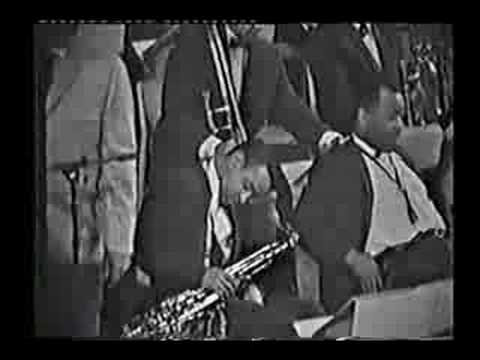
In Air Mail Special, above, Herb Ellis (right) and Charlie Byrd flank Tal Farlow. Below, Farlow plays Misty.
Misty
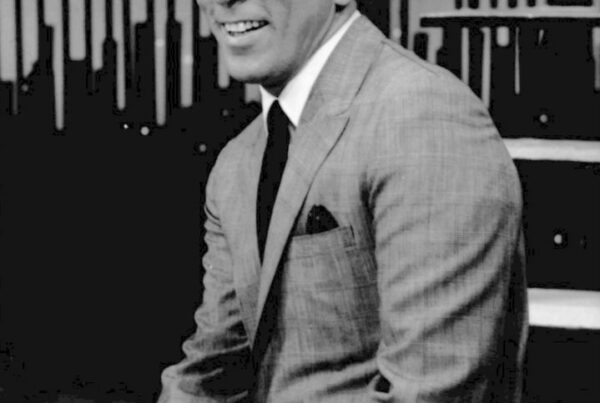
Benny Carter was apparently was one of the class acts in jazz, according to just about everything written about him. Only people who knew him can say that definitively. What any listener can say is how great a musician he was. Here is the start of his bio at SwingMusic.net:
Benny Carter has been as admired as virtually any saxophonist in jazz. As a trumpeter, although he only occasionally played the instrument, he achieved a rich tone and had a highly personal and original style. He will forever be remembered as much for his composing skills as his playing. His compositions, which include When Lights Are Low (1936) and Blues in My Heart (1931), became jazz and big band standards.
While mainly a self-taught musician, Carter came from a musical family and studied piano with his mother and sister at 10 years old before receiving lessons from a private teacher for a year. He turned to the trumpet as an early teen but soon grew impatient and switched to saxophone. His early influences included the growl style trumpeter Bubber Miley and a cousin, trumpeter Cuban Bennett. Carter went to Wilberforce University to study theology but instead left to play with Horace Henderson’s Wilberforce Collegians. Carter worked briefly with Duke Ellington in the 1920s and in 1928 made his recording and arranging debut as a member of Charlie Johnson’s Orchestra. With no formal music education, he taught himself to arrange music on two of the orchestra’s recordings, Charleston Is the Best Dance After All and Easy Money. Later that year, he joined Fletcher Henderson’s orchestra and assumed arrangement duties. Other early affiliations included the bands of Chick Webb (1931), the Chocolate Dandies and McKinney’s Cotton Pickers. Continue Reading…
Here is Carter’s site.
Wave
This Day in Music History notes that the sound track of the great spaghetti western The Good, The Bad and the Ugly was number one on the U.K. charts on this day in 1968.
Here is The Ukulele Orchestra of Great Britain’s take on the title track. The title of the orchestra’s DVD, Anarchy in the Ukulele, hopefully won its own prize.
In the context of this site, it’s difficult and not necessarily important to do posts about icons such as Hendrix. People who like that superstar or supergroup know far more than I do. Those who don’t aren’t interested. But it’s appropriate to feature a superstar or a superband once in a while. Also, the music generally is great.
Here is the Hendrix Channel at YouTube, a bio, a profile of The Jimi Hendrix Experience at The Rock & Roll Hall of Fame and brief reviews of the endless stream of Hendrix albums from Wilson and Alroy. Instead of posting another song — again, those who are interested know what they are and where to find them — I thought an interview conducted by Dick Cavett would be more interesting.
Hendrix on The Dick Cavett Show
The Billy Strayhorn Jazz Festival, organized by the Music Institute of Chicago and Billy Strayhorn Songs Inc. will be held this weekend in Evanston, Ill. Check out The Chicago Tribune for the program and other information. For us, it’s an excuse to feature Duke Ellington’s right-hand man. Here he plays Take the A Train with the Ellington Orchestra.
This family video of R.L. Burnside playing When My First Wife Left Me (above) was shot by the legendary Alan Lomax (along with Worth Long and John Bishop) in August 1978. Jumper on the Line was recorded for the documentary Deep Blues in 1990. Fat Possum Records writes this about Burnside:
North Mississippi guitarist R.L. Burnside was one of the paragons of state-of-the-art Delta juke joint blues. The guitarist, singer and songwriter was born November 23, 1926 in Oxford, MS, and made his home in Holly Springs, in the hill country above the Delta. He lived most of his life in the Mississippi hill country, which, unlike the Delta region, consists mainly of a lot of small farms. He learned his music from his neighbor, Fred McDowell, and the highly rhythmic style that Burnside plays is evident in McDowell’s recording as well. Despite the otherworldly country-blues sounds put down by Burnside and his family band, known as the Sound Machine, his other influences are surprisingly contemporary: Muddy Waters, John Lee Hooker and Lightnin’ Hopkins. But Burnside’s music is pure country Delta juke joint blues, heavily rhythm-oriented and played with a slide.
Below is Jumper on the Line.