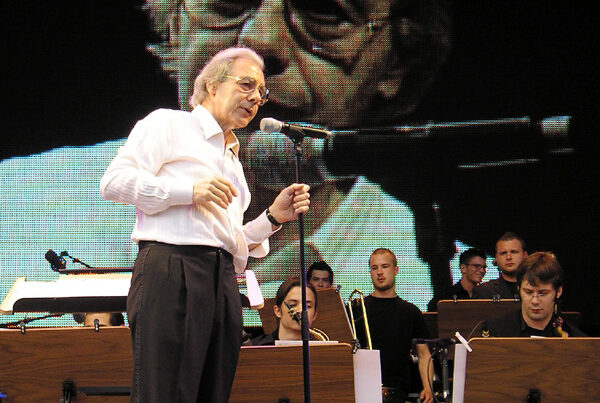
I was aware that Lalo Schifrin was a big deal in television theme songs. I did a post a while back in which it became apparent that he also was a serious jazz composer. This Blog Critics CD review posted at The Seattle PI, however, puts into context just how important and prolific Schifrin was:
Lalo Schifrin has had an amazing career in the fields of symphonic music, jazz, and especially soundtracks. Although his name may be more familiar to those of us who pore over soundtrack credits, I guarantee you have heard at least something by Lalo Schifrin. He has composed over 100 television and film scores, and a few of these include Mission Impossible, Mannix, Cool Hand Luke, Bullit, The Cincinnati Kid, The Amityville Horror, Enter the Dragon, four of the Dirty Harry films, and the recent Rush Hour trilogy. Believe it or not, even at over five hours of music, the new four-CD box-set Lalo Schifrin: My Life in Music barely scratches the surface of the composer’s incredible 50-year career.
While its true that films such as Enter the Dragon and The Amityville Horror were not known for their soundtracks, it is an incredibly impressive resume. Later on in the review, the writer discusses the respect Schifrin had in the jazz community, including several collaborations with Dizzy Gillespie.
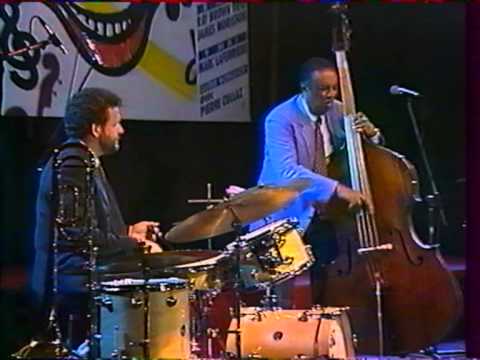
The beginning of NPR’s bio of bassist Ray Brown does a good job of quickly defining who he was — and the company he kept:
Grammy Award-winning double-bassist Ray Brown was a leader in defining the modern jazz rhythm section — in addition to being a first-rate soloist. His unique dynamic and innate sense of swing graced performances by Dizzy Gillespie, Ella Fitzgerald, Duke Ellington, Oscar Peterson and countless others.
Bebop was great music, but it could be intellectual and inaccessible. Brown’s allmusic bio, which is on the same page as Brown’s discography, hints at a player who wasn’t as challenging to listeners as many who played in his era:
The huge and comfortable sound of Ray Brown’s bass was a welcome feature on bop-oriented sessions for over a half-century.
Brown was married to Ella Fitzgerald from 1947 to 1952. This is from his obituary in The New York Times, which ran on July 4, 2002:
Mr. Brown won numerous critics’ and listeners’ popularity polls, and was regularly included among the half-dozen or so greatest of all jazz bassists, along with Oscar Pettiford, Charles Mingus, Milt Hinton, and Jimmy Blanton, whose performances with Duke Ellington he counted among his greatest influences.
Here are Five O’Clock Whistle and Things Ain’t What They Used to Be. Kevin Mahogany’s vocal on Yardbird Suite hints at rap and hip-hop styles that still were decades in the future.
Hello, thanks for stopping by.
There is no better place to start anything than with Louis Armstrong. Here he is supporting Dizzy Gillespie. Armstrong was the old guard and said some snide things about bebop, but the two ended up as great friends and lived close to each other in Queens. Jackie Gleason shows up at the end of this clip, so this must have been on his show.