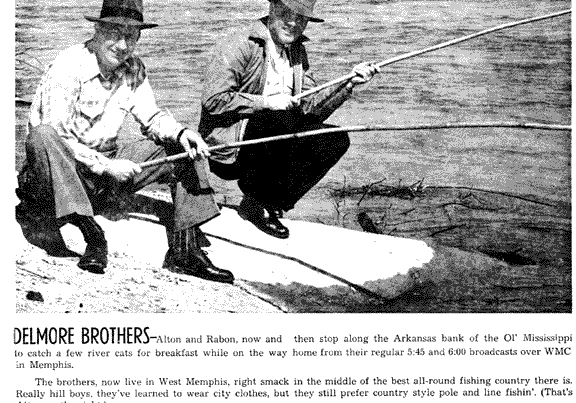
I usually shy away from posting on bands or performers for whom I can’t find video. After all, seeing the acts is as much fun and illuminating as hearing them. But in the case of the Alton and Rabon Delmore — The Delmore Brothers — the absence of video is unfortunate but not a reason to skip them. They are extremely important, though not as well remembered as some other early country bands. They also are terrific.
There are very good sites dedicated to the brothers. One is maintained by Alton Delmore’s daughter Debby. Another is The Delmore Brothers Room at Calhoun Community College in Decatur, AL.
CMT puts it well:
The Delmore Brothers are not nearly as well-known as such early country giants as the Carter Family, Jimmie Rodgers, Bob Wills, and Hank Williams. The reasons for this, upon close inspection of their work, are not readily apparent. They were one of the greatest early country harmonizers, drawing from both gospel and Appalachian folk. They were skilled songwriters, penning literally hundreds of songs, many of which have proven to be durable. Most important, they were among the few early traditional country acts to change with the times, and pioneer some of those changes. Their recordings from the latter half of the 1940s married traditional country to boogie beats and bluesy riffs. In this respect they laid a foundation for rockabilly and early rock & roll, and rate among the most important white progenitors of those forms. (Continue Reading…)
There is a very good essay at the YouTube page of the song above, I’ve Got the Deep River Blues. It was written written by a gentleman named Wilson McPhert. Read it by expanding the “show more” button. Here is how it starts:
I am a big fan of Doc Watson’s performance of ‘Deep River Blues’. In finding out about it’s origins, I came across the Delmore Brothers, who did a version in 1933 entitled ‘I’ve Got the Big River Blues’. I really like their close harmony singing and their straightforward approach to music, which morphed from rootsy country ballads to later up tempo tunes which were clearly influential on the development of rock and roll. (Continue Reading…)
Brown’s Ferry Blues, which I believe is an early number, is below.
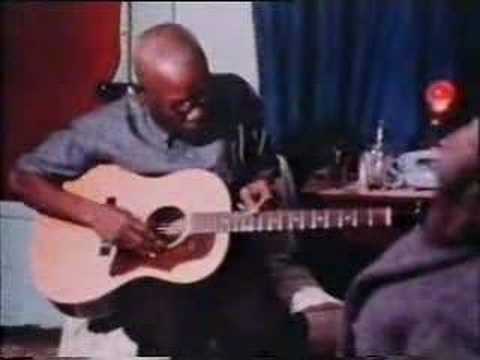
John Lee Hooker recorded music for more than 50 years. Here is the beginning of his website bio:
Born near Clarksdale, Mississippi on August 22, 1917 to a sharecropping family, John Lee Hooker’s earliest musical influence came from his stepfather, Will Moore. By the early 1940′s Hooker had moved north to Detroit by way of Memphis and Cincinnati. Hooker found work as a janitor in the auto factories, and at night, like many other transplants from the rural Delta, he entertained friends and neighbors by playing at “house parties”. He was “discovered” by record storeowner Elmer Barbee who took him to Bernard Besman, who was a producer, record distributor and owner of Sensation Records, Besman leased some of his early Hooker recordings to Modern Records. Among Hooker’s first recordings in 1948, “Boogie Chillen” became a number one jukebox hit for Modern and his first million seller. This was soon followed by an even bigger hit with “I’m In The Mood” and other classic recordings including “Crawling Kingsnake” and “Hobo Blues.” Another surge in his career took place with the release of more than 100 songs on Vee Jay Records during the 1950′s and 1960′s. (Continue Reading…)
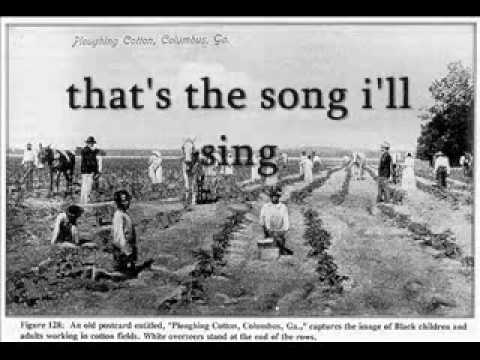
I don’t believe that Bessie Brown — who was billed as “The Original” Bessie Brown — was a major star. In a way, that makes the fact that we are listening to her at the end of 2012 — more than 80 years after she had a brief moments of fame — all the more amazing. The authenticity of Song from a Cotton Field, which is above – whether it was really a tenant farmer or sharecropper song — is an interesting question. The Internet Archive credits Brown as the composer, but it is possible that the core song was much older.
Of course, everything sounds a thousand years old. It is obvious, however, that the band backing her on that song and on Basin Street Blues, which is below, was hot.
Here is the note on Bessie Brown from the YouTube video.
Bessie Brown (Cleveland, Ohio 1895 – 1955), also known as “The Original” Bessie Brown, was a blues and classic jazz singer. She sometimes recorded under the pseudonyms of Sadie Green and Caroline Lee and should not be confused with her namesake, the Bessie Brown who recorded blues duets with George W. Williams. She was active as a recording artist from 1925 to 1928. She left showbusiness in 1932 and had three children before dying of a heart attack in 1955.
More on Brown–whose recording career only lasted from 1925 to 1928–at Red Hot Jazz, which is a great site dedicated to jazz before 1930.
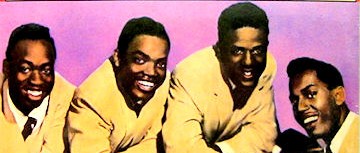
The Cadillacs were great, both before and after Earl Carroll sang one of the most recognizable lines in modern music: “Well now they often call me Speedoo, but my real name is Mr. Earl.”
The group’s story is told in loving detail at DooWop Nation. It’s a tremendously detailed history and one that even on the Web looks like it was banged out on a manual typewriter on a kitchen table in a cramped apartment by someone with a lot of great memories.
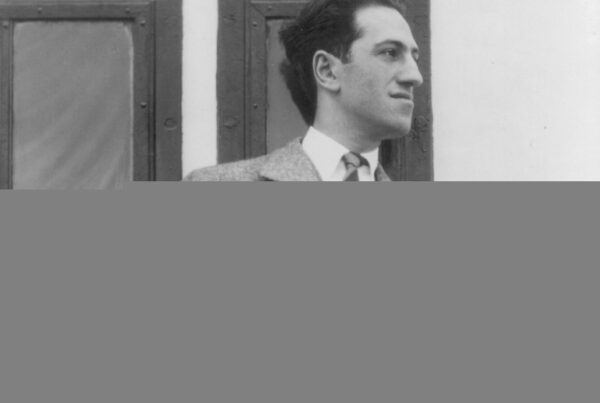
Leonard Bernstein’s performance of George Gershwin’s piece, which premiered on February 12, 1924, is in two sections. The continuation is here. Here is Gerswhin’s own version.
Gershwin’s version of I’ve Got Rhythm – here is a snippet — is rowdier than I thought it would be. For good measure, here is Charlie Parker’s take on the piece.
George and lyricist brother Ira Gerswhin have a site. George’s bio is part of an American Master’s profile.