Taking a rock song from the 1960s and, 30 or so years later, throwing the Danish National Concert Orchestra behind it may seem a bit much. The song would become bloated, self reverential and a bit ridiculous. But if the song is A Whiter Shade of Pale, it all comes off well. The band is in great form and the [pullquote]ddddd[/pullquote]video itself is excellent. Moreover, the song really sounds classical at the beginning. It’s not one of those hokey attempts — a classical orchestra playing Smoke on the Water.
Wikipedia said that a television special was recorded in 2006 at the Ledreborg Castle in Denmark. The name of the orchestra in that citation and at YouTube are slightly different, but this most likely is from that performance.
Procol Harum was a great band whose biggest song far outshone all its others. Here is the beginning of Wikipedia’s profile.
Procol Harum are a British rock band. Formed in 1967, they contributed to the development of progressive rock, and by extension, symphonic rock. Their best-known recording is their 1967 single “A Whiter Shade of Pale”.[1] Although noted for its baroque and classical influence, Procol Harum’s music also embraces the blues, R&B and soul. In October 2012, the band were nominated for induction into the Rock and Roll Hall of Fame, but were unsuccessful on this occasion.[2] (Continue Reading…)
The piece points out that Procol Harum was rejected in a bid to get into the Rock and Roll Hall of Fame last year. I think lesser bands are in. Here is a fan site that has a lot of interest material but seems to not have been updated. Below is Conquistador.
This is the beginning Steve Karras’ interview of Eagle guitarist Don Felder. The bulk of the interview can be found at the site web2carz through the link below.

Rock n’ Roll infamy can either by measured by sneer, attitude, or posturing—all the necessary badass rock star ingredients. And then there’s a legendary guitarist like ex-Eagle Don Felder, who embodies the flipside to all of those bizarre heroics that invariably come with the music. He’s a musician’s musician whose power and imagination has spawned some of the most memorable guitar lines (his introduction to “Hotel California” has been called one of the six most memorable guitar riffs of all time) ever played through a tube amplifier.
Nearly five decades after Glen Frey started calling him “Fingers”, Felder continues to make important music. In 2008, he became a New York Times bestselling author with Heaven and Hell: My Life in the Eagles (1974-2001) and has been on the road promoting his second solo album, Road to Forever. We recently talked to Don about his fruitful career and his lifelong love affair with music.
W2C: I always marvel at how great guitarists learned to play in the 50s and 60s, when they didn’t have tools like video instructionals, rock documentaries, and live performance films. There’s a great story about Paul McCartney getting on a bus to go to the other side of Liverpool to learn a B7 chord. Who taught you to play?
Don Felder: I was born into a very impoverished circumstance—no money—my father worked as a mechanic and my mother worked at the drycleaners. We really had no spare money. There was no music store in Gainesville that taught music, and we couldn’t pay for music lessons, anyway. My dad used to have this old reel-to-reel tape recorder with two speeds on it (seven and half and three and three-quarters speed). He would borrow people’s records and record them on to the tape, and if I wanted to learn something, I would record it at seven and a half and slow it down to three and three-quarters. It would be exactly half-speed and an octave down. So, I would play it, play it, and play it until I could pick out the notes exactly where they were on the guitar. Eventually I got to the point where I could play it pretty well. It was the process of being self-taught, ear training. That was a skill I developed early on out of bare necessity, to tell you the truth. The harder part was learning how to teach myself how to read music and play it back. I know the melody and the song, but when I looked at it from the sheet music it was like Japanese to me. It took me a long time to learn what all that notation meant–time signatures and rests and sharps and flats. But I felt it was imperative to be able to learn to sight read, so I taught myself that too.
When did you learn to sight read?
There was a guy named Paul Hillis who had grown up in Gainesville and was a really good guitar player, and he went away to Berklee College of Music. When he returned, he was no longer playing guitar, which was much to my disappointment. I thought for certain that I would be able to use him to teach me, but he opened up this school called Hillis School of Music in Gainesville and he hired me to teach there. For every hour I would teach a new beginner guitar student, he would teach me music theory and enough about notation to keep me going. Also, every Wednesday a group of people who were studying music composition and theory from him would write a piece, either for a horn band, bass, piano, drums, guitar, and horns, and then we would play each other’s pieces. Not only did it force me to learn to write for brass, or drums, and bass, and write for piano, but it was really a great workshop for me to learn and develop my reading and writing skills. Finally, when I got in the studio in Boston to do session work, I had somewhat mastered the basics of it. But if producers and composers would come in and we’d do eight or ten tracks in a three hour session and throw down these sheets in front of you, they’d expected you to sight read.
Did you have jazz chops?
I studied jazz in Gainesville. I copied all of Howard Roberts’ solos off the reel-to-reel tape recorder and then I started buying Mel Bay Jazz guitar books, learning how to play major sevenths, augmented chords, diminished ninths, and all these forms of chords. So, when I got sheet music or song sheet music I would at least know what that chord was and could figure out pretty much anything in the charts. I just taught myself. There was no other choice really. (Continue Reading…)
If George Harrison had done nothing except release All Things Must Pass -- no Beatles, no subsequent solo career — he would be an important figure.
The album has everything: There is all the great music, of course. But it also is special in the way it marks the transition from the crucible of being a Beatle to being George Harrison again. He celebrated this rebirth not by releasing a pop album, but instead a document that is as deeply philosophical and literate as it is musical. It shows very clearly that Harrison knew exactly what he wanted to do with his fame — and that the goal was enlightenment. It is, in my opinion, easily the greatest of any post-Beatle album and can hold its own against anything the band produced.
Here is Wikipedia’s entry on the album:
All Things Must Pass is a triple album by English musician George Harrison, released in November 1970 following the break-up of the Beatles seven months earlier. It includes the hit singles “My Sweet Lord” and “What Is Life”, as well as songs such as the title track and “Isn’t It a Pity” that were turned down by the Beatles. The album reflects the influence of Harrison’s musical activities outside the group in 1968–70 – with Bob Dylan, the Band, Delaney & Bonnie, Billy Preston and others – and his growth as an artist beyond his allotted, junior role to bandmates John Lennon and Paul McCartney during that time. The album introduced Harrison’s signature sound, the slide guitar, and the spiritual themes that would be implicit throughout his subsequent solo work. The original vinyl release consisted of two LPs of songs and a third disc of informal jams, titled Apple Jam. It was the first studio triple album by a single rock act and the first box-set studio album in the history of rock music. Commentators interpret Barry Feinstein’s album cover photo, showing Harrison surrounded by four garden gnomes, as a statement on his independence from the Beatles.
Production on the album began at London’s Abbey Road Studios in May 1970, with extensive overdubbing and mixing lasting through to the end of October. Among the large cast of backing musicians were Eric Clapton and Delaney & Bonnie’s Friends band – three of whom formed Derek and the Dominos with Clapton during the recording – as well as Ringo Starr, Gary Wright, Preston, Klaus Voormann, John Barham, Badfinger and Pete Drake. The sessions produced a double album’s worth of extra material, most of which remains unreleased. (Continue Reading…)
Ben Gerson’s review in Rolling Stone was mixed to positive and thoughtful. It was published on January 21, 1971:
Not surprisingly, his ambitions have remained unfulfilled by this role and what presumably has been welling up in him since at least Let It Be, perhaps since Meet The Beatles, comes pouring out on All Things Must Pass. It is both an intensely personal statement and a grandiose gesture, a triumph over artistic modesty, even frustration. In this extravaganza of piety and sacrifice and joy, whose sheer magnitude and ambition may dub it the War and Peace of rock and roll, the music itself is no longer the only message.
The lyrics are central. They are displayed prominently on the album sleeves and appear to have been written before the music. Often there are more syllables than notes, and lines have to be hurried in order to get it all in. Often too, there are unresolved sentence fragments (“Eyes that shining full of inner light”), funny word uses (“Another day for you to realize me”), and conscious attempts at literary effects (“beware of soft shoe shufflers/dancing down the sidewalks”). His words sometimes try too hard; he’s taking himself or the subject too seriously, or, if the subject is impossible to take too seriously, he doesn’t always possess the means to convey that impression convincingly. (Continue Reading…)
Jim Beviglia’s retrospective at American Songwriter also is interesting. The story is notable for the the back-lit, George-as-Jesus photo.
Above is Beware of Darkness from the concert for Bangladesh. He is accompanied by Leon Russell. I get tired of referring to him as the great Leon Russell, but it’s the truth. The version of All Things Must Pass below is way out of sync, but just great. It was his last public performance and, according to the comments, played on a guitar borrowed from somebody at VH1. Harrison hadn’t expected to play and didn’t bring one.
I always think of my distaste for the classic rock radio format when I hear songs such as The Letter. It’s one of the 50 or so songs to which the golden age of rock has been boiled down. The machine rolls drearily on. I bet some of the artists don’t like it either, except for the money. Others probably are fine with it.
The Rolling Stones no doubt are. The band is dusting off the old stuff once again. It’s fine–if they want to do it and people want to pay, God bless them all–but it’s a bit bizarre. We’ve gone from protests to prostates.
All this comes to mind when I really listen to this old stuff and realize, once again, how brilliant a lot of it is. The problem is that the Mad Dogs and Englishmen gang — led by the genius Leon Russell — was just a bunch of kids when they did this.
It’s been a long time. The song Mad Dogs and Englishmen was written by Noel Coward for the 1931 musical The Third Little Show. The Cocker album was released in 1970. In other words, four more years have elapsed between the album and today than between the writing of the song and the album. Rock and roll used to be about being young. Now it’s about getting old. It’s nobody’s fault, but it is a good reason to move on.
Check out the Noel Coward song, which was a satire about British imperialism. The full phase is that only “mad dogs and Englishmen go out in the midday sun.”
Above is Dave Mason’s Feelin’ Alright and below is The Letter, which was written by Wayne Carson Thompson and initially recorded by The Box Tops.
Soul of Wit, a good friend of the site, commented on a post last week featuring Tom Jones. He sent a link of Jones and The Cardigans covering The Talking Heads’ Burning Down the House. He suggested that it is impossible for a rock fan not to like the clip and, of course, he’s right.
The clip raises some questions: Are two people, at least in their public personas, more different than David Byrne and Tom Jones? Why does Jones always seem to be lip-synching, even when he almost certainly isn’t? Why does Jones make me think of William Shatner? Is that real fire in the video? I hope not.
In any case, here is more on The Cardigans:
One of the most pleasing pop groups of the ’90s, the Cardigans specialized in sugary confections that would grow annoying very quickly if they weren’t backed by solid musicianship and clever arrangements. The band’s 1995 breakout album, Life, reflected the Cardigans at their most saccharine — the sunny disposition of vocalist Nina Persson being the major argument in favor — and critics inserted the group into the space age pop revivalist camp. the Cardigans later proved that they were more difficult to pigeonhole, however.
Even the band’s origins showed that their later appearance was quite misleading; two heavy metal fanatics formed the group in October 1992 in Jonkoping, Sweden. Guitarist Peter Svensson met bassist Magnus Sveningsson in a hardcore group, though he had previously trained in music theory and jazz arranging. The two later grew tired of metal and decided to form a pop band with vocalist Nina Persson — an art-school friend who had never sung professionally — plus keyboard player Lars-Olof Johansson and drummer Bengt Lagerberg. (Continue Reading…)
Above is My Favourite Game and below is I Need Some Fine Wine and You, You Need to be Nicer. Here is the band’s rather minimal site.
The great rock and blues guitarist died in February, 2011, according to This Day in Music. This is Parisenne Walkway. His site is here.
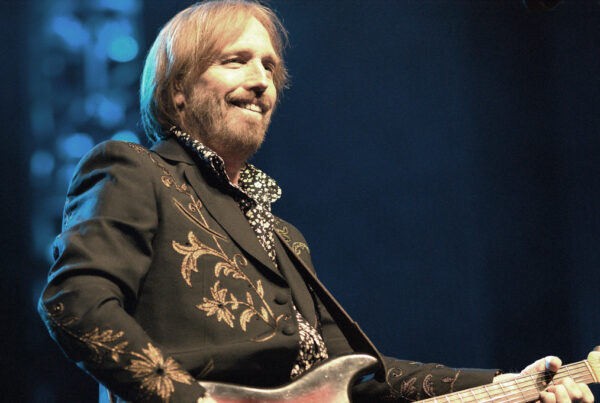
Like a lot of Tom Petty & the Heartbreaker’s songs, Mary Jane’s Last Dance (above) seems to have a touch of Dylan and a touch of British invasion. This song also sounds a bit like The Red Hot Chili Peppers. Below is Jammin’ Me.
Here is the band’s site and the start of the bio at The Rock & Roll Hall of Fame, into which the band was induced in 2002:
In a sense, Tom Petty and the Heartbreakers are America’s band. Durable, resourceful, hard-working, likeable and unpretentious, they rank among the most capable and classic rock bands of the last quarter century. They’ve mastered the idiom’s fundamentals and digested its history while stretching themselves creatively and contributing to rock’s legacy. Moreover they are, like such compatriots as Bruce Springsteen and the E Street Band, a people’s band, writing of everyday struggles and frustrations while offering redemption through tough-minded, big-hearted, tuneful songs. (Continue Reading…)
Below is Jammin’ Me.